

Autumn frosts in Colchester typically arrive from late October onwards, and by November the ground can be hard enough to make last-minute garden work genuinely difficult. Knowing how to prepare your Colchester garden for winter before that cold snap hits can mean the difference between a garden that bounces back beautifully in spring and one that needs significant remedial work. This guide walks through everything you need to do, in a sensible order, so nothing gets missed.
Quick Answer
Start winter preparation in September or October, before the first frost. Focus on cutting back spent growth, protecting tender plants, feeding your lawn with an autumn formula, and checking fencing and structures for storm damage. Getting ahead of the cold weather keeps your garden healthier and reduces the workload come spring.
Key Takeaways
- Colchester’s first frosts usually arrive late October to early November — start prep in September.
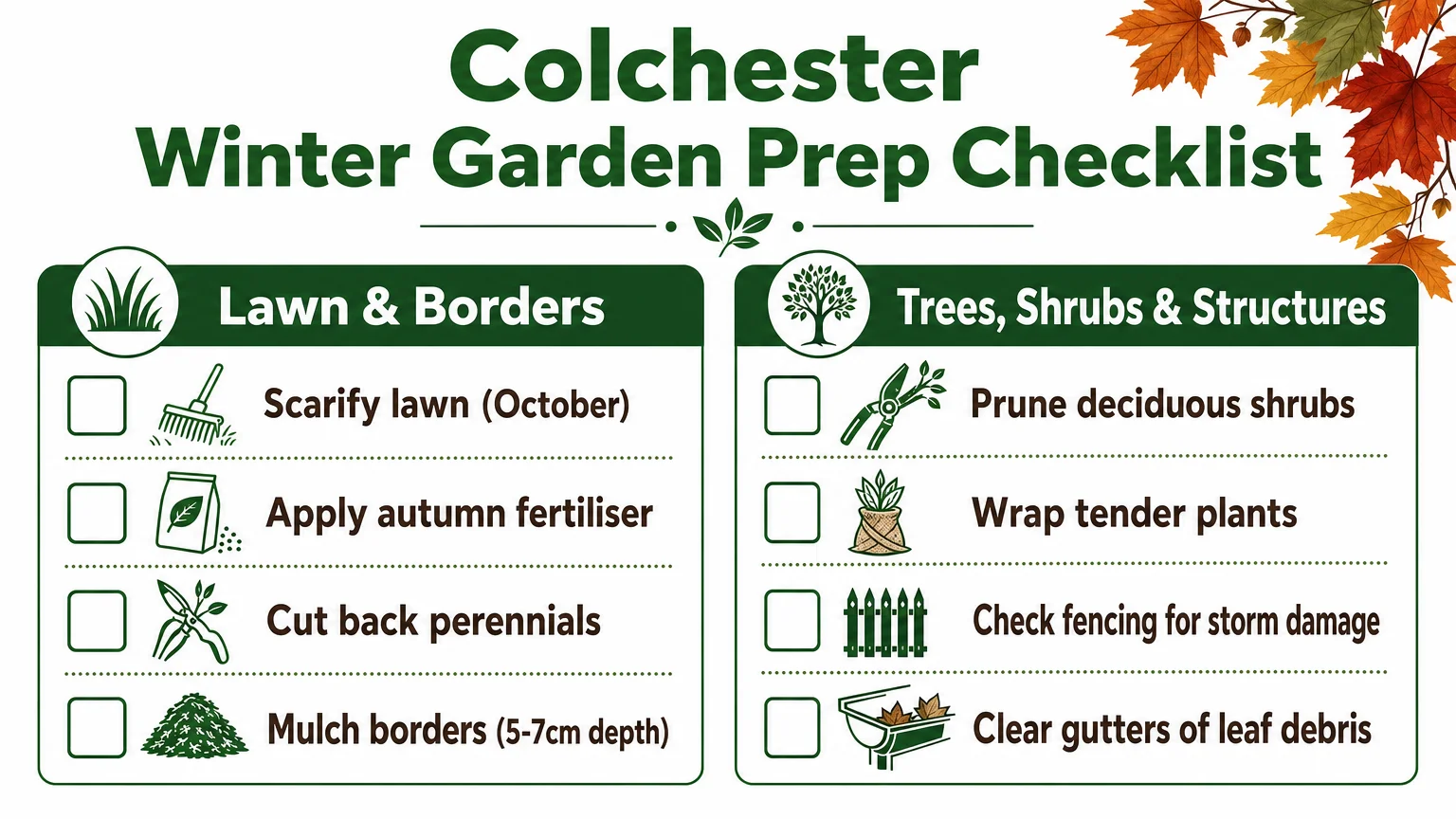
- Scarify and aerate your lawn before the ground hardens; apply an autumn fertiliser low in nitrogen.
- Cut back herbaceous perennials but leave some seedheads for wildlife through winter.
- Mulch borders with a 5–7 cm layer of compost or bark to insulate roots and suppress weeds.
- Wrap tender plants — tree ferns, cannas, dahlias — in horticultural fleece or hessian.
- Lift and store frost-sensitive bulbs such as dahlias and begonias in a cool, dry place.
- Check fencing, gates and trellis for loose panels before autumn storms arrive.
- Clear gutters and drains of fallen leaves to prevent waterlogging.
- Prune deciduous shrubs once they drop their leaves, but leave roses until late February.
- Booking a local Colchester gardening professional early means you get the best available dates before the autumn rush.
When Should You Start Preparing Your Colchester Garden for Winter?
The honest answer is earlier than most people think. September is the ideal starting point for lawn work and border tidying, with October being the key month for mulching, plant protection and structural checks. By November, the soil temperature in Essex has usually dropped enough to slow down plant recovery, so anything you can do before then has a much bigger impact.
Colchester sits in one of the drier parts of the UK, but Essex winters still bring hard frosts, persistent damp and occasional strong winds that can damage unprotected plants and fencing alike. A phased approach — lawn first, then borders, then structures — keeps the work manageable across a few weekends rather than one frantic day.
What Lawn Care Tasks Should You Do Before Winter?
Autumn is actually one of the most important times of year for your lawn, and skipping this window is one of the most common mistakes Colchester homeowners make.
Scarification and aeration remove the thatch layer that builds up over summer and allows air and moisture to reach the root zone. This is best done in September or early October when the grass is still actively growing and can recover before the cold sets in. After scarifying, top-dress with a sandy loam mix to level any hollows and improve drainage.
Autumn fertiliser is quite different from summer feed — it should be low in nitrogen (which promotes soft, frost-vulnerable growth) and higher in potassium and phosphorus to strengthen roots. Apply it in September or October following the manufacturer’s guidance.
Mowing should continue through autumn but at a higher cut setting — around 4–5 cm — to protect the grass from frost scorch. Stop mowing once growth halts, usually by November in Colchester. If you’re thinking about refreshing a patchy lawn next spring, it’s worth exploring lawn care and mowing in Lawford to understand what a professional service can offer locally.
How Do You Protect Borders and Perennials Through a Colchester Winter?
Borders need a bit of thought rather than a blanket cut-back. Some plants genuinely benefit from being left alone until spring.
Cut back herbaceous perennials — hostas, geraniums, delphiniums — once the foliage has died back. However, plants like sedums, echinaceas and ornamental grasses provide structure and food for birds through winter, so it’s worth leaving a proportion of seedheads standing until February.
Mulching is one of the highest-value jobs you can do in autumn. A 5–7 cm layer of well-rotted garden compost, bark chippings or leaf mould applied around the base of plants insulates roots against hard frosts, retains moisture and gradually feeds the soil as it breaks down. Keep mulch away from direct contact with plant stems to avoid rot.
For anyone thinking about refreshing their borders with new planting next spring, planting and border creation in Witham and planting and border creation in Kelvedon and Feering are useful resources for understanding what’s possible with professional help nearby.
Which Plants Need Extra Winter Protection in Essex?
Not every plant in a Colchester garden is fully hardy, and the ones that aren’t need attention before October is out.
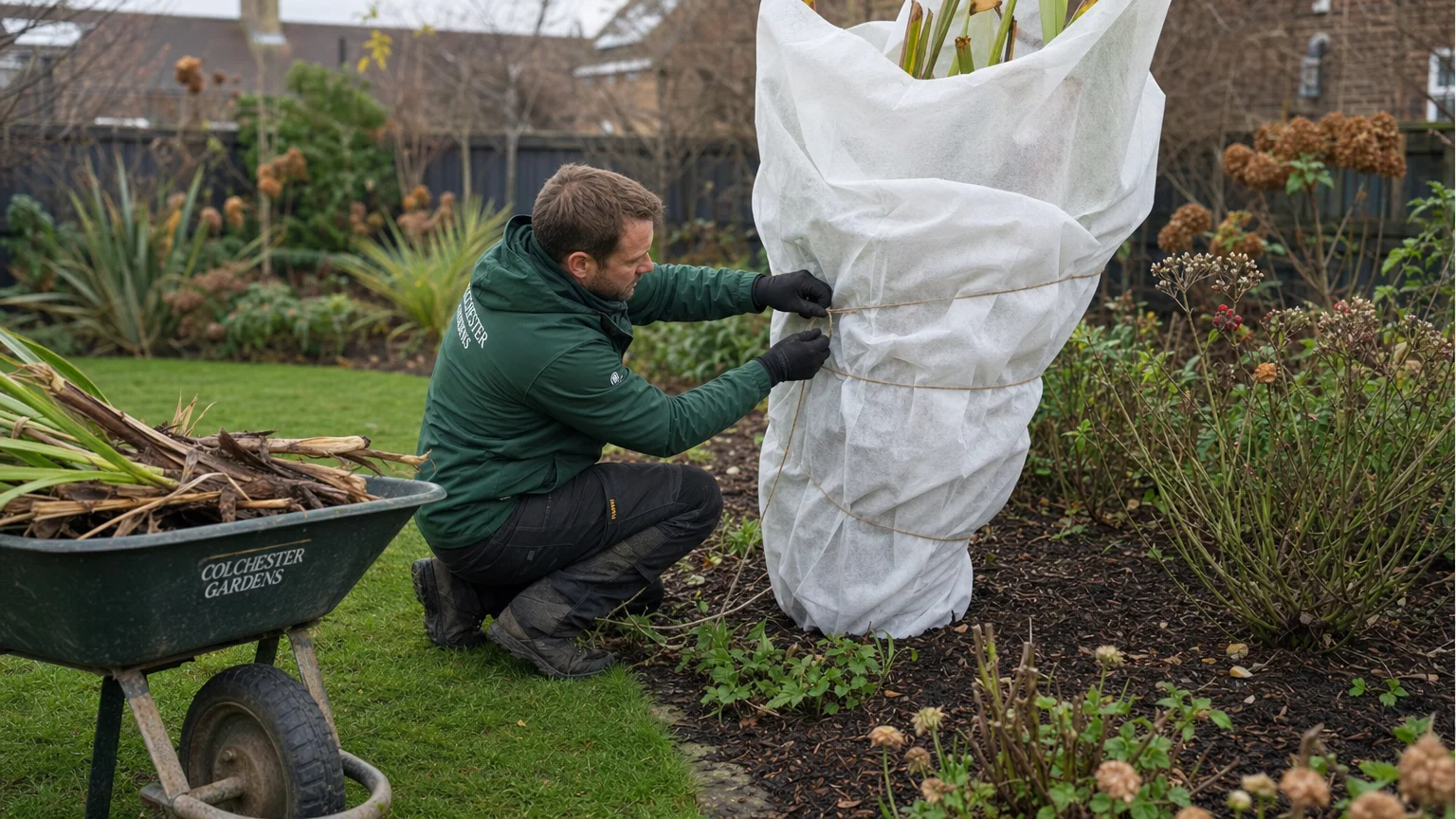
Tender plants to wrap: Tree ferns, banana plants (Musa), cannas and ginger lilies should have their crowns packed with straw and wrapped in horticultural fleece or hessian. Secure the wrapping with garden twine but don’t make it airtight — some airflow prevents fungal issues.
Bulbs to lift and store: Dahlias, begonias and gladioli won’t survive a hard Colchester frost in the ground. After the first frost blackens the foliage, lift the tubers carefully, dry them off for a few days, then store in paper bags or trays of dry compost in a cool, frost-free shed or garage.
Container plants: Pots left outside are vulnerable because the roots have no insulation from the surrounding soil. Move tender container plants into a greenhouse, conservatory or sheltered porch, or wrap the pots themselves in bubble wrap or hessian.
Roses: Resist the urge to prune roses hard in autumn — a light tidy to prevent wind rock is fine, but the main prune should wait until late February in Colchester to avoid frost damage to fresh cuts.
Should You Prune Trees and Shrubs Before Winter?
Deciduous shrubs can be pruned once they drop their leaves, typically from November onwards. This is a good time to remove dead, damaged or crossing branches, improve the shape of shrubs like forsythia and weigela, and thin out overgrown hedges. If your hedges need professional attention, hedge cutting and pruning in Hadleigh gives a good sense of the kind of work local professionals handle.
Avoid pruning stone fruits — cherries, plums — in autumn as this increases the risk of silver leaf disease. These are best left until summer. For most ornamental trees, a light structural tidy in late autumn is perfectly fine, but significant crown work is better carried out by someone with the right equipment and experience.
What Structural and Practical Jobs Are Often Overlooked?
Garden structures take a battering over winter, and a few hours spent checking them in October can save you a much bigger repair bill in spring.
| Job | Why It Matters | Best Time |
|---|---|---|
| Check fence panels and posts | Loose panels blow down in autumn storms | October |
| Clear gutters and drains | Blocked drains cause lawn waterlogging | October–November |
| Store garden furniture | UV and frost degrade materials quickly | Before first frost |
| Clean and oil tools | Prevents rust and extends tool life | Any dry day in autumn |
| Empty and store hoses | Frozen water splits hose fittings | Before first frost |
| Check greenhouse glazing | Gaps let in frost and pests | September–October |
If your fencing has seen better days, it’s worth getting a professional assessment before winter storms make it worse. Garden fencing in Coggeshall and garden fencing in Earls Colne are both examples of the kind of fencing work available locally.
Is It Worth Hiring a Local Gardener for Winter Prep in Colchester?
For many homeowners, the answer is yes — particularly for the more physical tasks like scarification, hedge cutting, tree pruning and garden clearances. These jobs require specific equipment and take considerably longer by hand than with professional machinery.
A local Colchester gardening service can assess the whole garden in one visit, prioritise what genuinely needs doing before winter, and carry out the work efficiently. Waste removal is often included or can be arranged, which removes the hassle of multiple trips to the tip. For anyone managing a rental property or a larger garden, this kind of support is particularly practical. Garden maintenance in Sudbury is a useful comparison point for understanding the range of maintenance services available in this part of Essex.
Getting Your Colchester Garden Ready — Next Steps
Preparing your garden for winter is genuinely one of the best investments you can make in its long-term health. A few days of focused work in September and October means less remedial effort in spring and a garden that looks better throughout the colder months too.
If the task list feels daunting, or if there are specific jobs — scarification, hedge pruning, fencing repairs, garden clearances — that need professional equipment or an extra pair of hands, get in touch with Gardening Services in Colchester for a no-obligation quote. Work is tailored to your garden’s specific needs, and the scope, timescale and any waste removal are agreed before anything starts. Autumn slots fill up quickly, so the sooner you enquire, the more flexibility you’ll have over timing.
Frequently Asked Questions
When should I mulch my garden borders in Colchester?
Apply mulch in October or early November, after cutting back spent growth but before the ground freezes hard. A 5–7 cm layer of compost or bark chippings is sufficient for most borders.
Can I leave dahlias in the ground over winter in Essex?
It's risky. Colchester can experience hard frosts that will kill dahlia tubers left in the ground. Lifting them after the first frost and storing them in a cool, dry place is the safest approach.
Should I feed my lawn in autumn?
Yes, but use an autumn-formula fertiliser that is low in nitrogen. Applying a high-nitrogen summer feed in autumn encourages soft growth that is vulnerable to frost damage.
How do I protect my garden fence from winter storms?
Check all fence posts for movement and re-secure any loose panels before autumn storms arrive. Replace any posts showing signs of rot at the base, as these will fail in strong winds.
Is it too late to plant bulbs in November in Colchester?
Spring-flowering bulbs such as tulips and alliums can be planted right through November and even into early December in Colchester, as long as the ground is not frozen solid.
What should I do with my lawn if it gets waterlogged in winter?
Avoid walking on a waterlogged lawn as this compacts the soil and damages the grass. If waterlogging is a recurring problem, aeration in autumn — or installing drainage — will help significantly.
Do I need to prune my roses before winter?
A light trim to reduce height and prevent wind rock is sensible in late autumn, but hold off the main hard prune until late February or early March in Colchester to protect fresh cuts from frost.
Can a local gardener handle all of this winter prep in one visit?
For most residential gardens, yes. A professional gardening team can carry out lawn care, border tidying, pruning, plant protection and structural checks in a single visit, often including waste removal.
Contributing writer at Gardening Services in Colchester, UK.